
Into the bush

“Make sure you buy nets,” said the friendly car rental agent as we left the counter at the small Uluru airport. I thought she was speaking about mosquito nets for the bed. When I went outside to find the car, I understood. Immediately, a dozen bush flies started swirling around my head and randomly trying to land on my face.
The Australian desert happens to be a perfect breeding ground for these flies that are attracted to humans. They disappear at night and during the day are silenced with a fly net that you can easily wear over your hat.
As we drove from the airport, Uluru, formerly Ayers Rock, was directly ahead of us. A sacred site to the Aboriginal peoples, it is a large sandstone rock that rises out of the flat outback almost in the center of Australia.
Bathing in the sunlight, we experienced one of those moments of being in front of the real thing we had always heard about. We stopped at the ranger station and did a small hike before getting ready for sunset.
It was worth the trip to this small town in the middle of the continent. The rock turned a stunning bright orange before the sun disappeared. We retired back to the hotel for an overpriced buffet dinner, as there weren’t many options. I did get a chance to try some kangaroo meat which the locals assured me was like eating venison, healthier and better for the environment than beef.
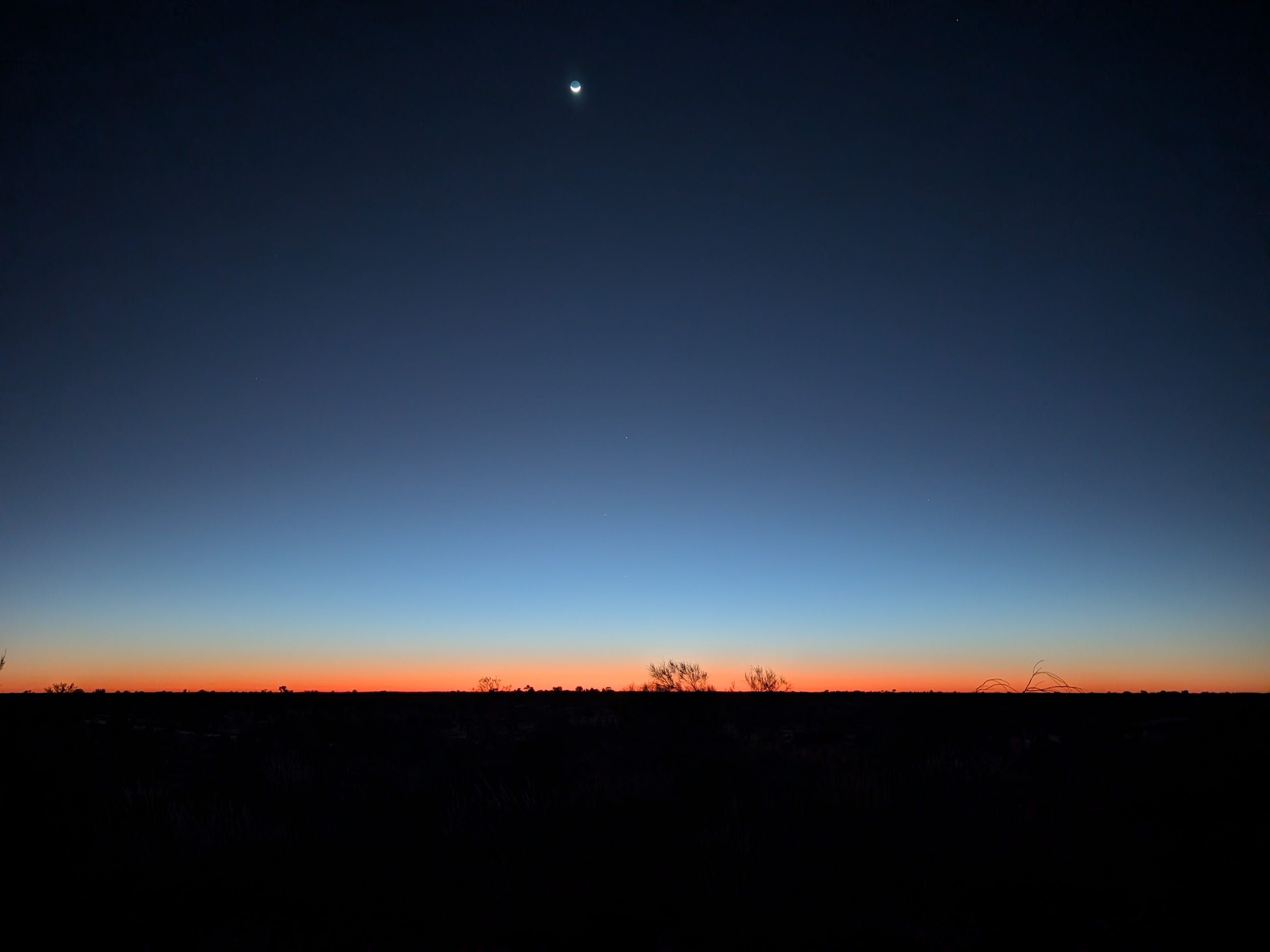
The next day, we woke up earlier before the sunrise to get into a good viewing spot. There was total darkness as we walked from the car to the viewing deck, but the stars and the moon were incredible. When we arrived at the viewing deck, I realized over a hundred people had the same idea as we did. We jockeyed for position and waited. The view was good but didn’t compare to the sunset experience.
After the sunrise, we headed back to the main ranger station at the base of the rock. I saw a few different people get out of the cars with running gear and start off on a path next to the rock. I spoke to the ranger who told me that the path around Ayers Rock is popular with runners because it is a perfect 10-kilometer loop.
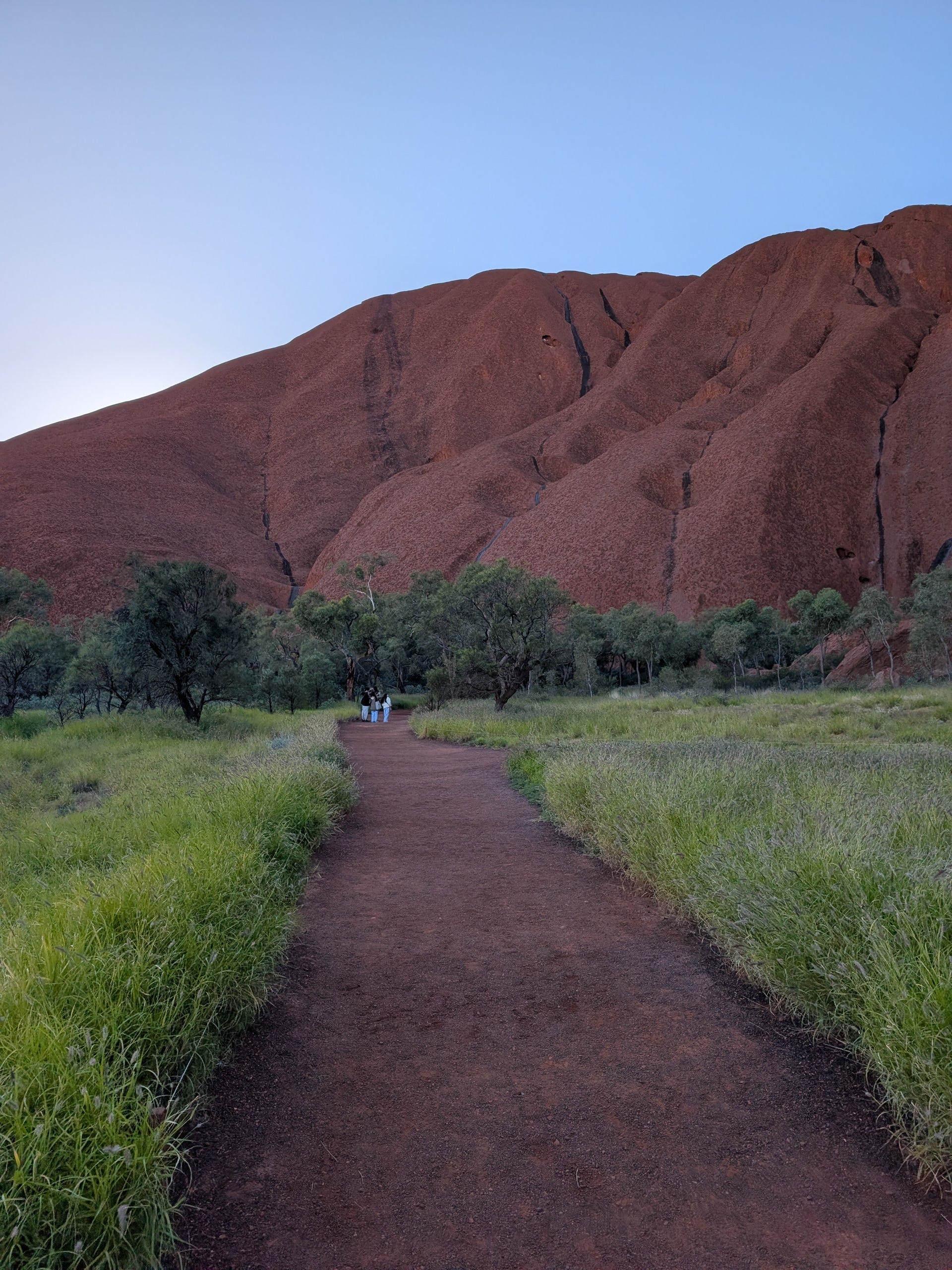
After assurance from him that it doesn’t upset the ancestors, I quickly changed my gear and joined in. The ranger was right - it was a great run with plenty of photo opportunities. The weather was still cool in the morning, and the flies had not awoken yet.
After the run, we were off to Alice Springs, a larger central Australian city. We had a flight out the next morning. Even though the two cities look like they are next to each other on the map, they are still a five-hour drive apart.
One sunset and sunrise was more than enough time for us in Uluru. Everything was overpriced but perfectly set up for a one-night stay.
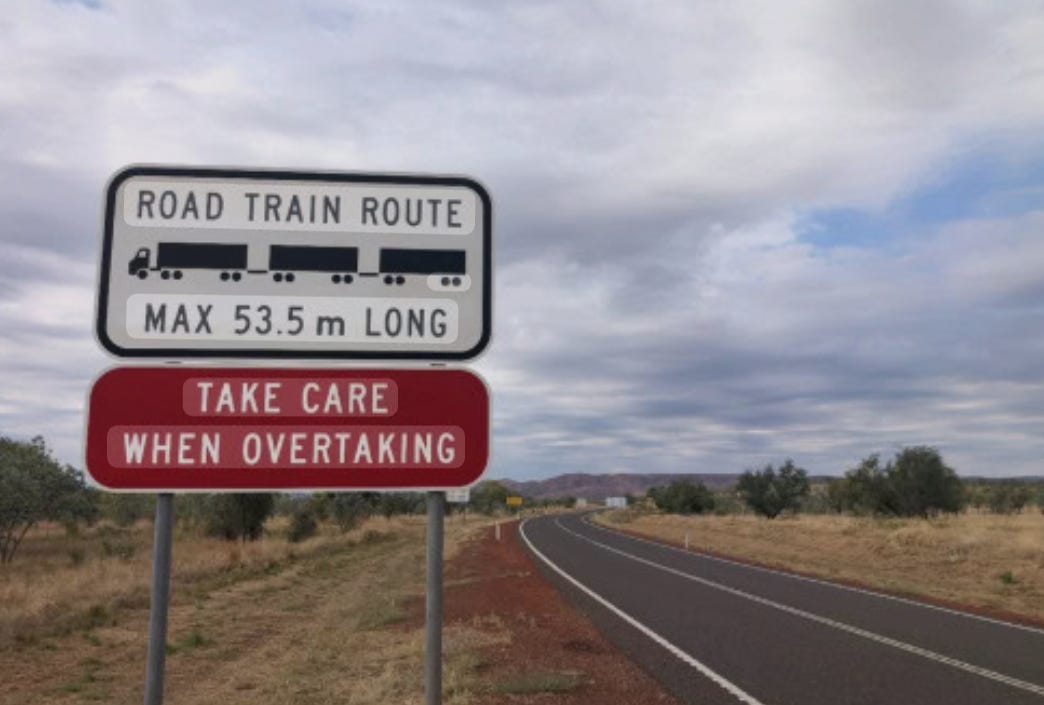
A confident driver myself, I was not prepared for the road trains - large semi-trucks with three to four trailers attached behind them. They are used in isolated areas like the outback where trains are not feasible. After seeing them, I understood why Mad Max was created in Australia.
When we arrived in Alice Springs that afternoon, everything other than the bars and a few restaurants was closed. When I asked a local why everything was closed, he said that it wasn’t a Ghan day. The Ghan is a luxury four-day train ride across Australia from Darwin in the north to Adelaide in the south. It stops in Alice Springs once or twice a week with side trips offered to Urulu and a number of other activities in town.
This was the first place in Australia that I saw Aboriginals. They were in the bars with the locals. As I walked down the street, I noticed some bars with bouncers sitting outside. Next to them on the doors to the open bars, there were headshots of what seemed like Aboriginals that were banned from the establishments.
Reading Bruce Chatwin’s “Song Lines” helped me to understand the situation. Written in 1987, the book is about the ancient oral pathways that cross Australia and have been used by Aboriginals for thousands of years. He wrote, “the Aborigines put all of their mental energies into keeping the world the way it was,” contrasting with the European mindset of “forever changing the world to fit their doubtful vision of the future.”
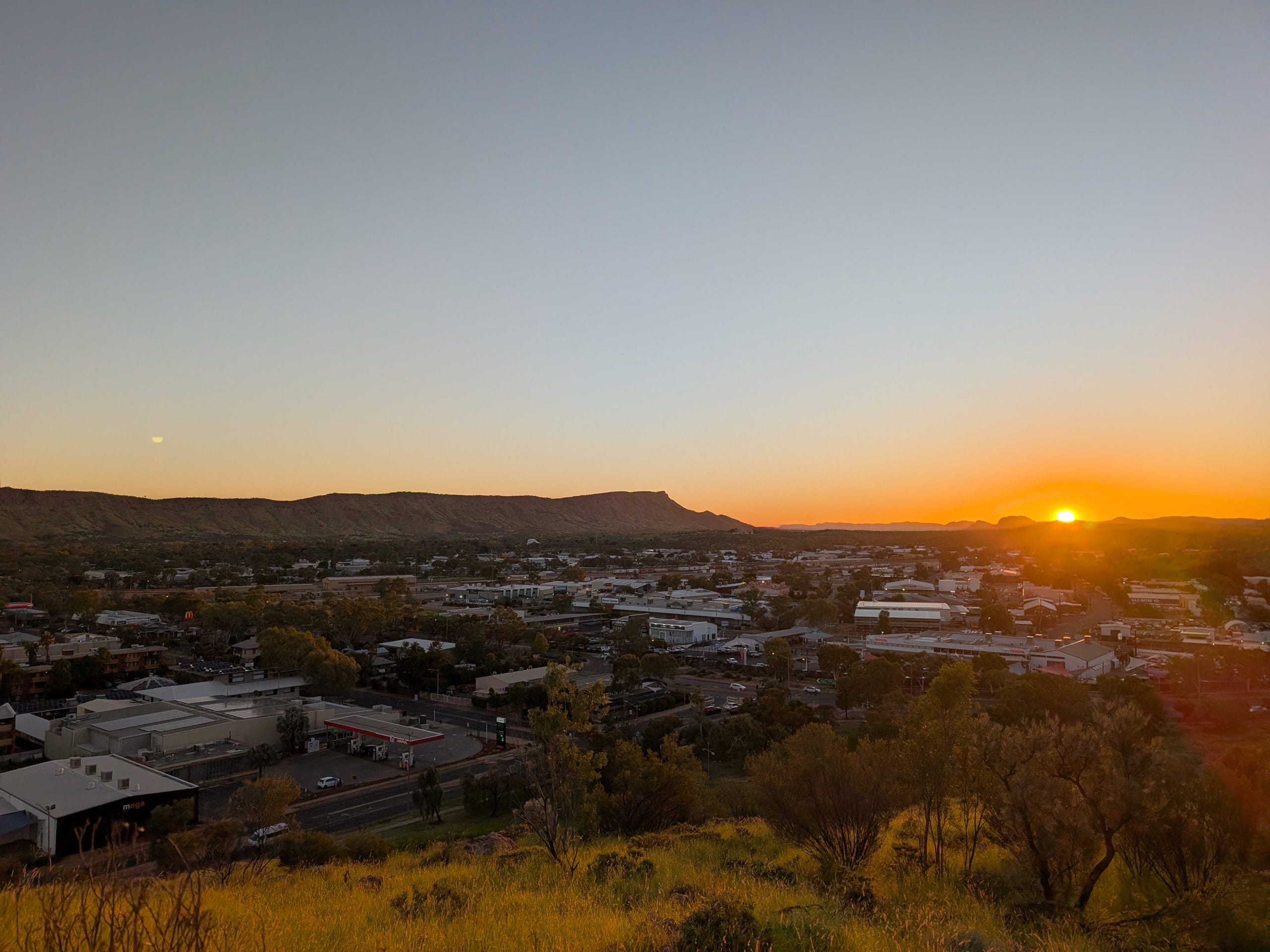
I was able to survey the entire city from the ANZAC hill. The hill is on the lands of the Arrernte people, local Aboriginals of Alice Springs. Since 1933, the site has been used as a tribute to all of the Australians and New Zealander Army Corps that died in World War One. As the sun set, I still had more questions than answers about Oz.